

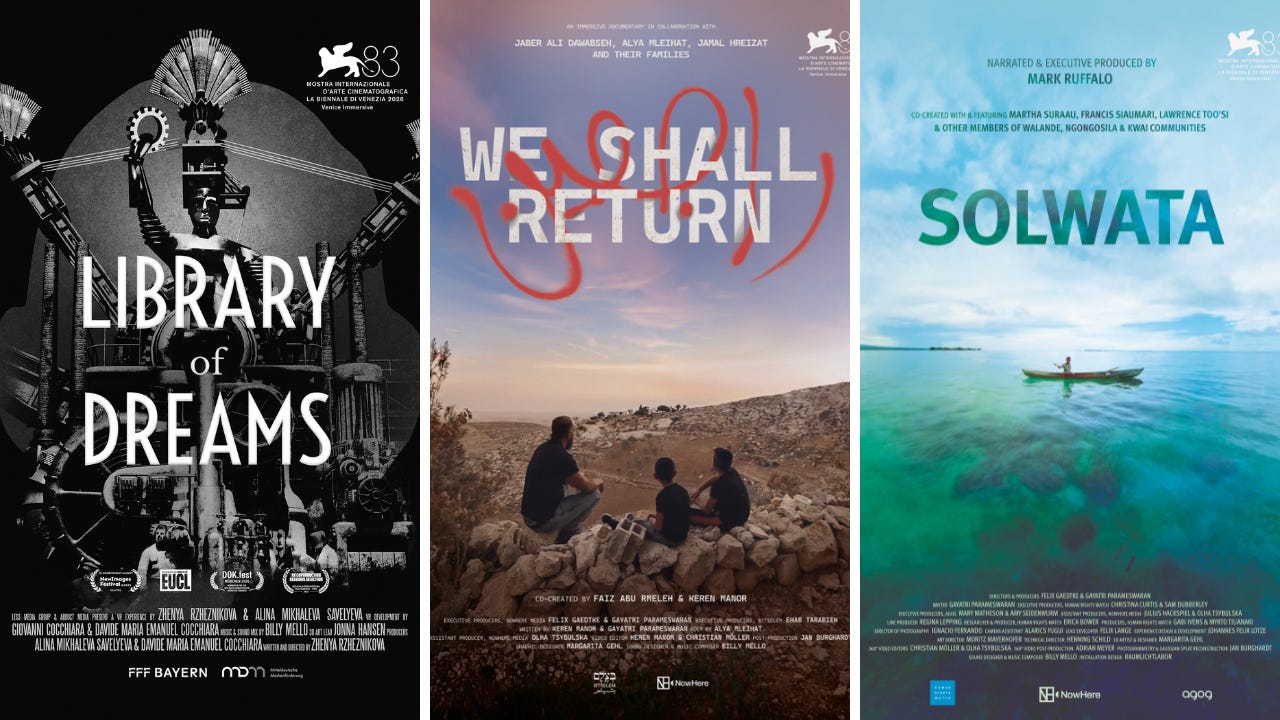
There are moments in a career that look impressive from the outside, but feel more complicated from the inside.
Having three projects I worked on selected for Venice Immersive / Venice Biennale is absolutely one of them.
Library of Dreams.
Raj’in (We Shall Return).
Solwata.
Three very different works. Three different realities. Three different forms of pressure.
One moves through dreams born under oppressive regimes, the other places the viewer inside Palestinian shepherding communities facing forced displacement in the occupied West Bank, and the last one brings climate change out of abstraction and into lived human consequence.
And I had the privilege of working as sound designer and music creator on all three.
That is something I’m deeply proud of. Getting into Venice is not small. It means the work has reached one of the strongest stages in the world for immersive storytelling. It means the teams behind these projects managed to build something precise enough, urgent enough, and artistically strong enough to deserve that attention.
But the part that stayed with me most was not the selection itself.
It was the question these projects kept asking me:
What should sound do when the story is already carrying so much truth?
Because this is where sound can become dangerous. It can exaggerate, beautify pain or even tell the audience what to feel before they have had the chance to witness anything for themselves.
It can turn lived experience into emotional packaging.
And in these three projects, that would have been the wrong move.
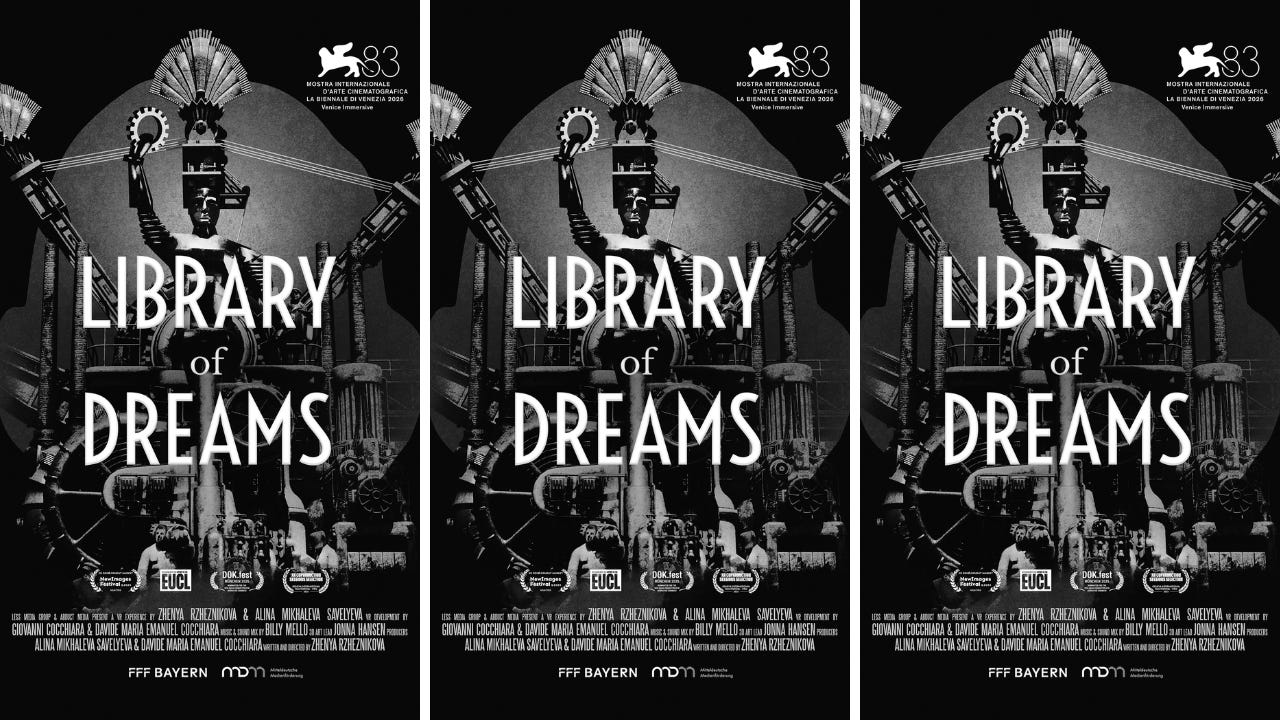
With Library of Dreams, the challenge was different from realism. The project is built from real dreams connected to oppressive regimes: Germany under the Third Reich, the Soviet Union, and present-day Russia. Dreams where fear, silence, propaganda, memory, and survival find strange ways to speak.
That concept hit me hard.
I grew up in Brazil during the dictatorship years. I remember the atmosphere of caution. The implicit violence. Sometimes explicit violence. The strange education of fear that enters a child’s body before they fully understand politics.
“Don’t reply. Comply.”
That kind of sentence stays longer than people think.
So when I approached the sound and music for Library of Dreams, I wasn’t thinking, “How do I make this eerie?” That would be too easy.
The real question was:
How do you make a dream feel like a pressure system?
Not fantasy. Not surrealism for effect. But the psyche trying to survive when language becomes unsafe
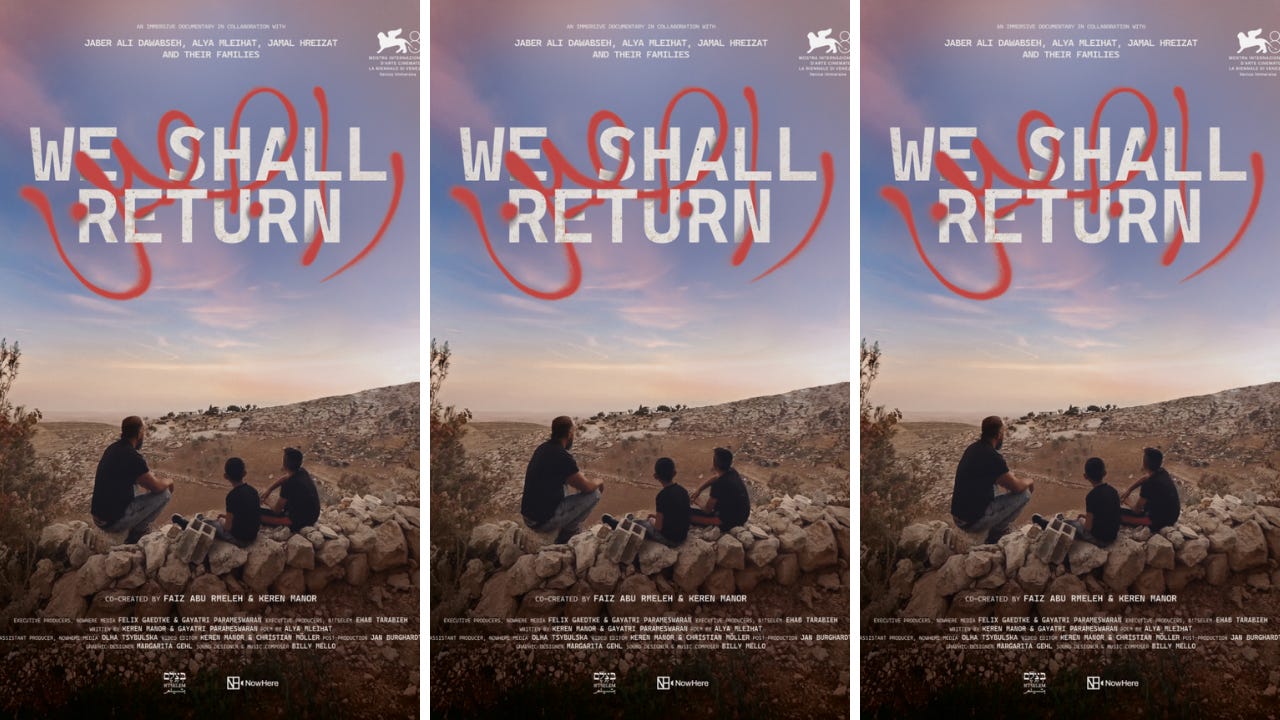
With Raj’in (We Shall Return), the question became even sharper.
The film is a 360° VR documentary by B’Tselem, co-produced with NowHere Media, about Palestinian shepherding communities in the occupied West Bank. It deals with forced displacement, settler violence, and state violence.
In that context, sound has to know its place.
If the camera already shows the truth, what right does music have to add drama?
That became the constraint.
I didn’t want to “enhance” reality in a way that would make suffering feel cinematic. I didn’t want tension tricks. I didn’t want the soundtrack to behave as if the audience needed to be emotionally instructed.
The job was to hold attention, keep the viewer close and support presence without taking ownership of the pain.
That is a very different kind of composition. It requires restraint
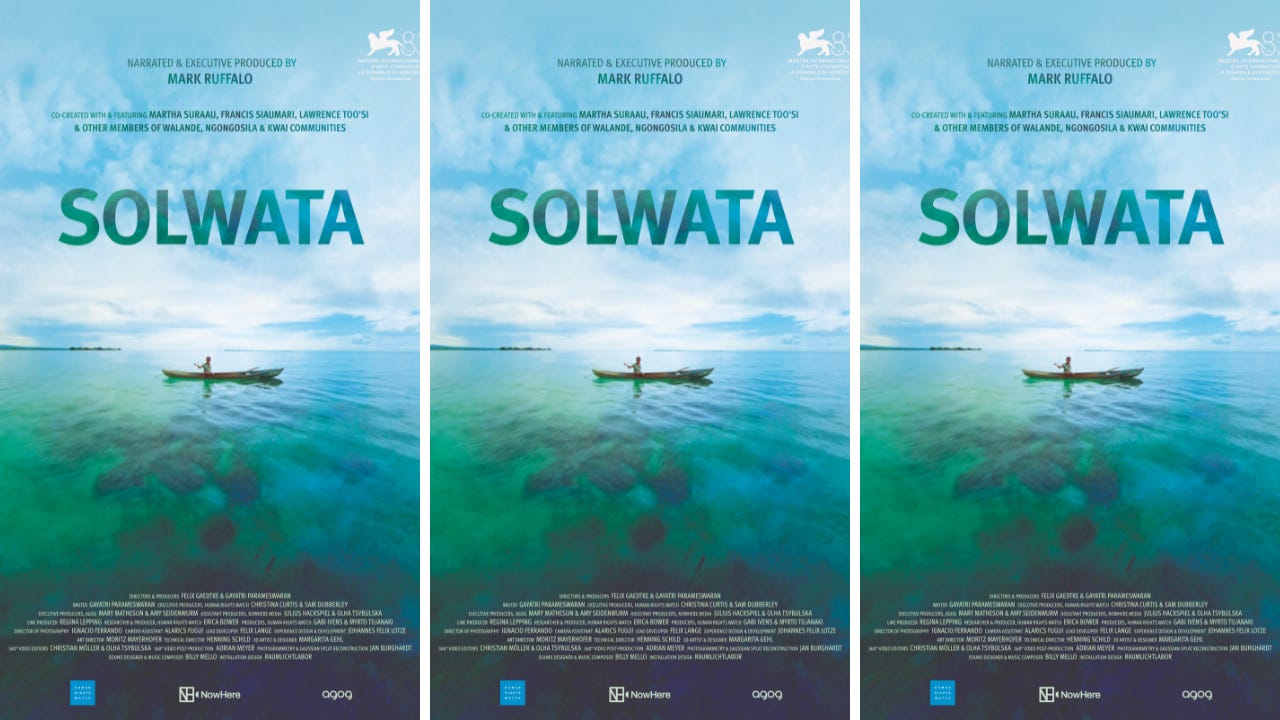
With Solwata, the emotional territory changed again.
Climate change is often spoken about through scale: numbers, forecasts, maps, graphs, consequences projected into the future.
But Solwata brings it back to proximity.
To people, dignity, memory and the point where the “future” is already someone’s present.
Working alongside teams connected to Human Rights Watch, Agog, NowHere Media, and with Mark Ruffalo helping bring visibility to the project, I felt the responsibility of every sonic decision. The story could not become abstract. It could not become sentimental wallpaper either.
It needed emotional precision.
And this is where the three projects met. Not in subject, style or tone.
They met in the same creative principle:
Emotion cannot be treated as decoration.
That is exactly why I applied Emotitone across all three projects
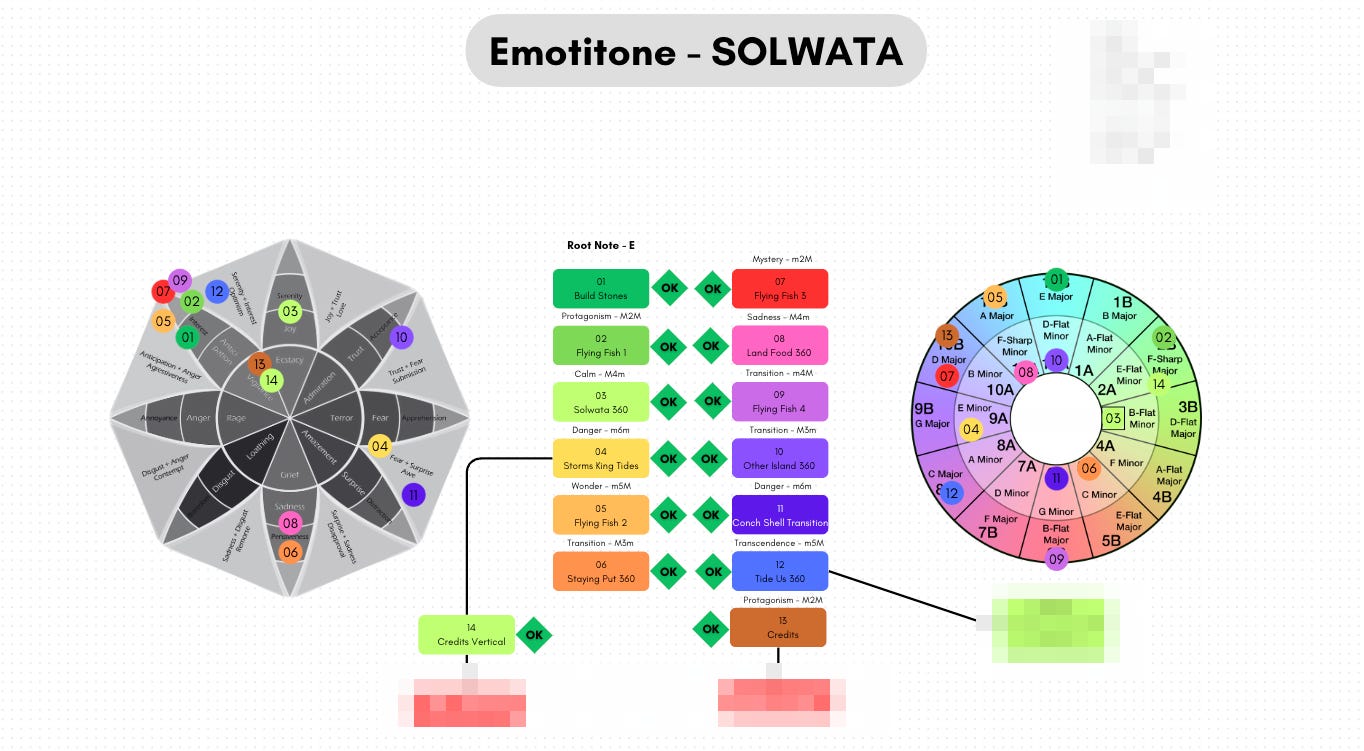
Emotitone is my approach to designing emotional arcs through sound and music. The idea is simple, but demanding:
Sound should not be added at the end as atmosphere. It should help the story move through the emotional states it needs to portray.
That means asking better questions before writing anything:
What emotion is the audience supposed to carry forward from this moment?
Where does tension need to become clarity?
Where should discomfort remain unresolved?
Where does music help the viewer stay present, and where does it start manipulating them?
When is silence more honest than sound?
In immersive work, these questions matter even more.
Because in VR the audience cannot simply look away in the same way. They are placed inside the story’s space. Sound is not just accompaniment, it becomes architecture. It tells the body where it is, what is near, what is unstable, what should be trusted, what cannot be escaped.
That power has to be handled carefully.
A weak assumption would be: “If the story is emotional, the music should be emotional too.”
I don’t think that’s always true.
Sometimes the more emotional choice is less music, or a sound that refuses beauty or even a texture that keeps a human trace but avoids comfort.
Sometimes it is a transition that lets the viewer breathe before the next truth arrives.
That was the shared thread across these three works.
For Library of Dreams, sound had to follow the logic of fear, memory, and dream recurrence.
For Raj’in, sound had to respect the moral weight of witnessing.
For Solwata, sound had to bring climate reality close without turning it into spectacle.
Three projects. Three emotional systems. One responsibility.
And Venice matters because it gives these works a larger room, visibility and proximity to audiences, curators, artists, journalists, and institutions that can help these stories travel further.
But for me, the deeper achievement is that these projects are not using immersion as a gimmick.
They are using it to ask difficult questions about memory, violence, displacement, climate, responsibility, and what it means to stay present when reality becomes uncomfortable.
I’m proud to have contributed sound and music to them.
And I’m genuinely grateful to everyone who made these projects possible: the directors, producers, editors, researchers, partners, and every team member who carried the work with discipline and integrity. Being part of teams like that is the real privilege.
Not because the work is “big”, but because the work demanded care.
And because these projects reminded me of something I keep returning to:
Sound is never neutral when the audience is inside the story.
It can distance people from the truth, or it can help them stay with it.
That was the decision I kept making across all three projects: to use Emotitone not to intensify emotion for its own sake, but to connect each story to the emotional arc it needed to carry.
Because of three very different forms of human pressure, I chose to treat sound as emotional structure, and the work became less about scoring scenes and more about helping people stay present with what the stories were asking them to witness.
The question I’m left with is this:
When immersive stories bring us this close to someone else’s reality, what does sound owe to the truth?
Best wishes,
Billy.