
2112 and the AI

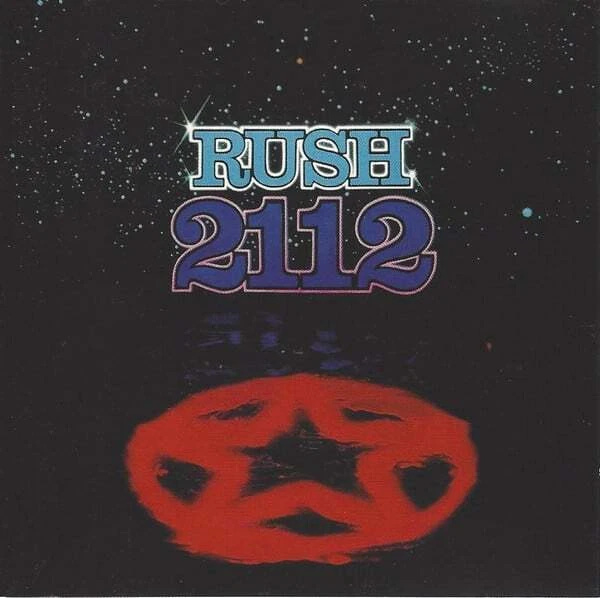
I’m not a huge Rush fan.
I acknowledge the talent, and the sheer instrumental competence, but I never carried them around as “my band.”
Still, something landed hard this week when Alexandre Piccini commented about 2112 under a post I’d written about AI.
Because 2112 is not subtle about what scares controlled systems.
It’s not “bad art.”
👉 It’s unauthorized meaning.
Here’s the album:
A person finds an instrument. Not a weapon. Not a manifesto. A guitar. A private doorway. A way to generate a feeling without asking anyone what feeling is allowed.
And the moment that doorway exists, the whole logic of the temple collapses.
That’s what I keep thinking about while watching the arts right now, especially with AI in the room.
We’re arguing about tools, about ethics, about jobs, about plagiarism, about “human touch.”
All real.
But underneath, another fight is happening: who gets to decide what counts as culture, and what gets labeled as noise.
Because in practice, the modern “Temples of Syrinx” are often not villains.
They’re committees, incentives, platforms, funding criteria, brand safety, festival taste, algorithmic distribution.
They don’t ban expression outright.
👉 They standardize it.
They reward what is easy to categorize, easy to moderate, easy to resell, easy to explain in one sentence, easy to predict.
And AI accelerates the part that makes this dangerous: once “pretty good” becomes cheap and abundant, the scarce resource stops being craft.
The scarce resource becomes permission.
Permission to be weird without being punished.
Permission to build something that does not resolve cleanly.
Permission to make an experience that changes the body, not only the opinion.
That’s why 2112 still reads like a creative manifesto inside constrained systems.
It says: if you bring the thing that actually breaks the pattern directly to the gatekeepers, don’t expect a neutral evaluation.
Expect a nervous system response.
“Confusing.”
“Too niche.”
“Not right for our audience.”
“Doesn’t fit the format.”
“Can you make it more accessible?”
“Can you smooth it out?”
👉 Sometimes those notes are real clarity notes.
👉 A lot of times they’re comfort notes.
👉 And the trap is that they sound identical.
So I’ve been using a blunt internal test lately.
When someone asks you to make the work more “normal,” ask what they’re protecting.
Is it the audience’s understanding?
Or is it the system’s control?
Those are not the same constraint, and treating them as the same will slowly drain the blood out of the work.
I’m grateful Alexandre brought 2112 back into my feed, because it reminded me that creative freedom isn’t a vibe.
It’s a structural argument about who gets to decide what people are allowed to feel.
Where have you felt that pressure lately in your own work?
Best wishes,
Billy.